Ingredients
Method
- Pat the chicken dry. Mix the salt, pepper and garlic powder and rub it all over the drumsticks and thighs.
- Heat the olive oil and 1 tablespoon of butter in a large, deep skillet or braiser over medium-high heat. Brown the drumsticks for 8 to 10 minutes, turning, until golden on all sides. Move them to a plate.
- Add another tablespoon of butter and lay the thighs in skin side down. Cook for about 5 minutes until the skin is deep golden, turn and cook 2 minutes more. Move to the plate.
- Pour off all but about 2 tablespoons of fat. Add the remaining butter, the onion, mushrooms, bay leaves and thyme. Cook over medium heat for about 8 minutes, until the mushrooms have released their liquid and started to brown.
- Stir in the garlic and cook 1 minute. Sprinkle in the flour and stir for another minute until no dry flour is visible.
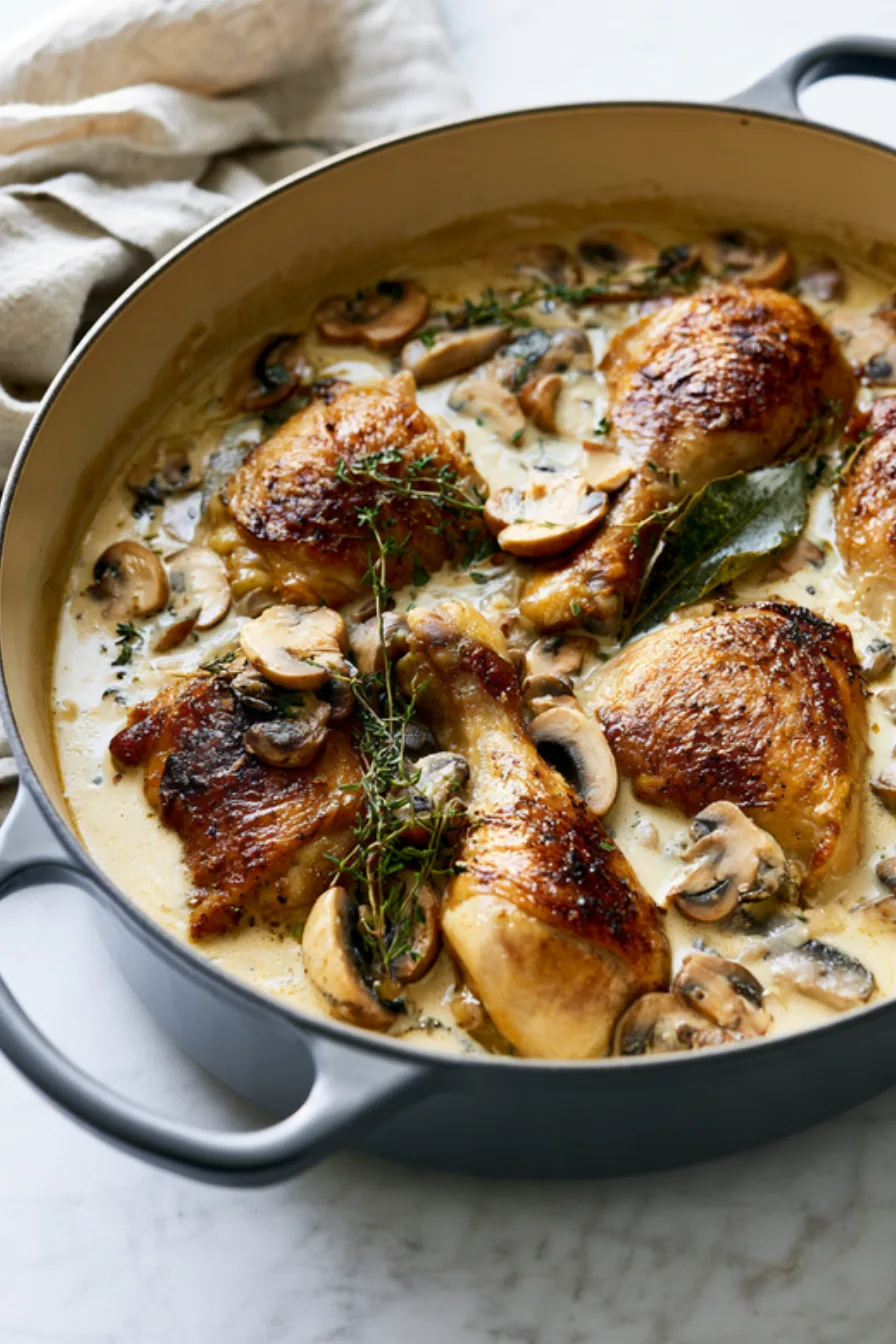
- Pour in the wine and scrape up the browned bits. Let it bubble for a minute, then stir in the stock until smooth. Return the chicken and its juices, skin side up. Bring to a gentle simmer, cover, lower the heat to medium-low and cook 25 to 30 minutes, until the thickest thigh reads at least 165°F (74°C) near, but not touching, the bone.
- Remove the bay leaves and thyme stems. Stir the cream, nutmeg and final salt and pepper into the sauce and heat through for 2 to 3 minutes without boiling hard. Adjust the seasoning and finish with parsley or thyme leaves.
Notes
Storage: refrigerate in an airtight container for up to 3 days. It freezes for up to 3 months; the cream sauce may look slightly grainy after thawing, and a good stir while reheating brings it back.
Make ahead: the fricassee is often better the next day. Reheat gently over medium-low heat, covered, with a splash of stock.
Without wine: replace it with the same amount of extra stock plus 1 teaspoon of lemon juice or white wine vinegar.
Sauce too thin? Lift out the chicken and simmer the sauce uncovered for a few minutes before adding the cream.
Cuts: all thighs or all drumsticks work; keep the pieces bone-in and check the temperature rather than the clock.
Nutrition is an estimate calculated from standard ingredient values, not a laboratory analysis. It varies with how much skin you eat and how much fat you pour off.