
| Prep | 5 minutes |
| Cook | 10 minutes on the stove + 45 minutes in the oven |
| Cool | 10 minutes |
| Total | about 1 hour 10 minutes |
| Serves | 6 |
| Equipment | medium saucepan, whisk, silicone spatula, 12-inch (30 cm) square baking tray, offset spatula or bench scraper |
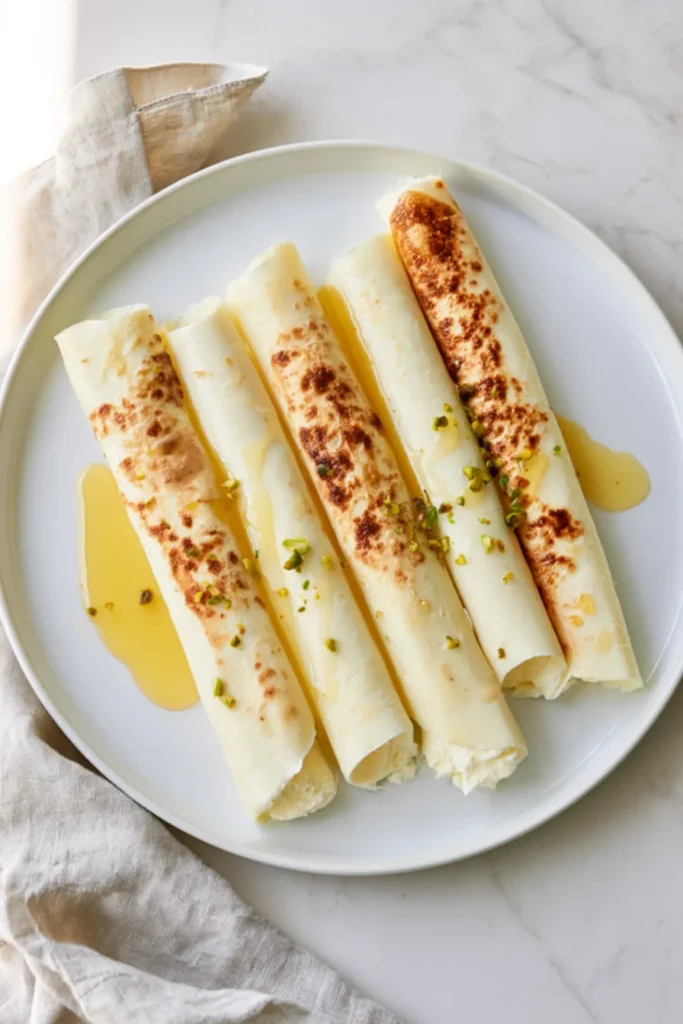
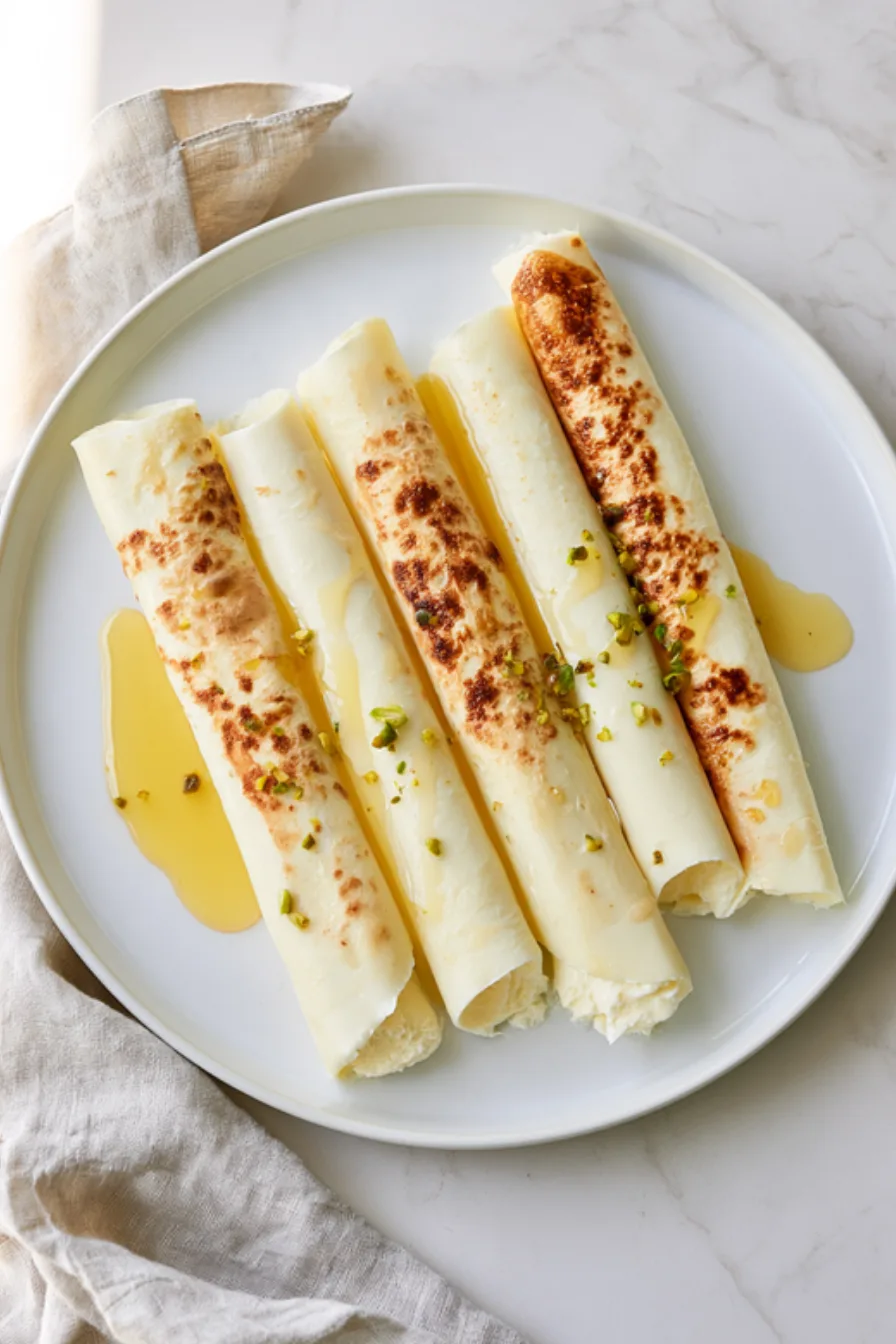
Qishta, also spelled ashta, is the thick, milky cream used across the Middle East to fill pastries like atayef and to top knafeh and fruit. The traditional way to make it takes patience: milk is simmered slowly and the skin that forms on top is lifted off again and again. The baked version that went viral from Dubai takes a shortcut. A simple cooked cream of milk, heavy cream, a little sugar and cornstarch is spread thin in a tray and baked low and slow until the top turns golden. Then comes the fun part: you push a spatula across the surface and the cream folds over itself into soft, ruffled rolls.
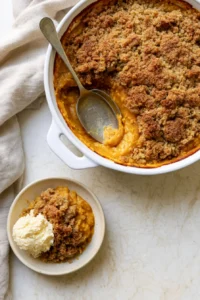
The result is a light, barely sweet dessert with a delicate golden skin and a creamy center, finished with a drizzle of honey and a handful of chopped pistachios. It needs only four ingredients for the cream, all of which are probably already in your fridge and pantry.
Ingredients
For the cream
- 2 cups (500 ml) whole milk – whole milk gives a richer, creamier set than low-fat milk.
- 1 1/4 cups (300 ml) heavy cream – the fat is what lets the top brown and keeps the rolls soft.
- 3 tbsp cornstarch – thickens the cream so it holds its shape once baked.
- 2 tbsp sugar – just enough to round out the flavor; the sweetness comes mostly from the topping.
To serve
- 3 to 4 tbsp honey, or simple syrup.
- 2 tbsp chopped unsalted pistachios.
How to Make It
1. Heat the oven and mix – 5 minutes
Heat the oven to 265°F (130°C). In a medium saucepan, whisk the cold milk, sugar and cornstarch together before you turn on the heat, then whisk in the heavy cream. The mixture should be completely smooth, with no white clumps of cornstarch at the bottom of the pan.
2. Cook until thick – low to medium-low, 8 to 10 minutes
Cook, whisking constantly and scraping the bottom and corners of the pan, until the cream thickens and starts to bubble. Keep stirring for another minute or two once it bubbles. It is ready when it coats the back of a spoon thickly and a line drawn through it holds for a second, like a soft pudding.
3. Spread in the tray – 2 minutes
Pour the hot cream into the baking tray and spread it into a thin, even layer, right into the corners. Tap the tray on the counter a couple of times to level it. The layer should be about 1/3 inch (8 mm) thick. A thin layer is what turns into neat rolls later.
4. Bake low – 265°F (130°C), 45 minutes
Bake on the middle rack until the surface is set and has a few golden spots. The center should no longer look wet and should barely jiggle when you shake the tray. If your top is still pale after 45 minutes, switch on the broiler for 1 to 2 minutes and watch it closely, since it colors fast.

5. Cool slightly – 10 minutes
Let the tray sit on the counter for about 10 minutes. The cream firms up a little as it cools, which makes the rolls hold together better.
6. Scrape into rolls – 5 minutes
Hold an offset spatula or bench scraper almost flat against the tray and push it forward in one steady movement, about 2 inches (5 cm) wide at a time. The golden skin and the cream underneath fold over themselves into ruffled rolls. Lift each scoop onto a serving plate. Short, confident pushes give the best ruffles. If the cream tears instead of folding, it needs a few more minutes to cool.
7. Serve
Drizzle with honey and scatter the chopped pistachios over the top. Serve warm or chilled.
Why the Rolls Form
The ruffles are not shaped by hand. They come from two layers baked together. The cornstarch thickens the milk and cream into a soft, sliceable cream, and the long bake at a low temperature dries the surface just enough to form a thin, slightly firm skin without making the inside rubbery. When the spatula pushes across the tray, the skin acts like a sheet of paper and rolls up, carrying the soft cream with it.
That is also why the cream is cooked on the stove first. Cornstarch needs enough heat to thicken properly. Iowa State University’s food preparation lab manual cooks its cornstarch puddings until the mixture boils, stirring gently, then keeps stirring for a couple more minutes. Skipping that step leaves a runny base that will not set in the oven.
Choosing the Pan
The size of the pan decides the thickness of the layer, and the thickness decides the rolls.
- 12-inch (30 cm) square tray: what this recipe is written for, giving a thin layer and well-defined rolls.
- 9×13-inch (23×33 cm) pan: works well; the layer is slightly thicker, so add 5 to 10 minutes to the bake.
- Smaller pans: the cream ends up too thick to roll. It still tastes good, but you will get soft scoops rather than ruffles.
A light-colored metal tray browns more gently than a dark one. If you use a dark pan, start checking a few minutes early.
Ways to Serve It
Honey and pistachios are the classic pairing, and the floral sweetness balances the plain cream nicely. A simple sugar syrup flavored with a few drops of rose water or orange blossom water is another traditional option. For children, a drizzle of melted chocolate or chocolate sauce turns it into something closer to a cream dessert they already know. Fresh berries or sliced mango also go well with it.
Storage
Baked qishta is best on the day it is made, when the skin is still tender. Leftovers keep, covered, in the refrigerator for up to 2 days. Serve them chilled, since the cream becomes firmer and smoother in the fridge. Add the honey and nuts just before serving so they don’t soak in. It does not freeze well; the texture turns watery once thawed.
Frequently Asked Questions
Can I use low-fat milk or skip the heavy cream?
The fat in whole milk and heavy cream is what gives the rolls their soft texture and helps the top brown. With low-fat milk or less cream, the result is firmer, paler and closer to a set pudding.
Why did my cream crack instead of rolling?
Usually the layer was baked too long or the oven ran hot, which dries out the skin. It can also happen if the cream is scraped while it is still too hot and soft. Keep the temperature low and let it rest for 10 minutes before scraping.
Is this the same as traditional qishta?
Not exactly. Traditional qishta is made by collecting the layers of skin that form on simmering milk, and it is often used as a filling. This baked version is inspired by it and copies its texture in a much quicker way, which is why it is usually served on its own as a dessert.
For more creamy, spoonable desserts, try the maple chia seed pudding or the layered pumpkin trifle. If you love honey, the salted honey cinnamon cookies are a must, and the tahini swirl brownies bring another Middle Eastern flavor to the table. Browse all of our dessert recipes for more ideas.
Baked Qishta
Ingredients
Method
- Heat the oven to 265°F (130°C). In a medium saucepan, whisk the cold milk, sugar and cornstarch until smooth, then whisk in the heavy cream.
- Cook over low to medium-low heat, whisking constantly, until the cream thickens and starts to bubble, 8 to 10 minutes. Keep stirring 1 to 2 minutes more.
- Pour into a 12-inch (30 cm) square baking tray and spread into a thin, even layer.
- Bake for 45 minutes, until set with a few golden spots on top. If still pale, broil 1 to 2 minutes, watching closely.
- Let cool for 10 minutes.
- Push an offset spatula or bench scraper across the surface, about 2 inches at a time, so the cream folds into soft rolls. Transfer to a plate.
- Drizzle with honey, sprinkle with chopped pistachios and serve warm or chilled.
Notes
Leave a Reply