
| Prep | 40 minutes |
| Cook | about 50 minutes (crust, filling and meringue) |
| Total | about 5 1/2 hours, including 1 hour cooling and at least 3 hours in the fridge |
| Serves | 8 |
| Equipment | deep 9-inch pie plate, parchment and pie weights, medium saucepan, whisk, stand or hand mixer, offset spatula |
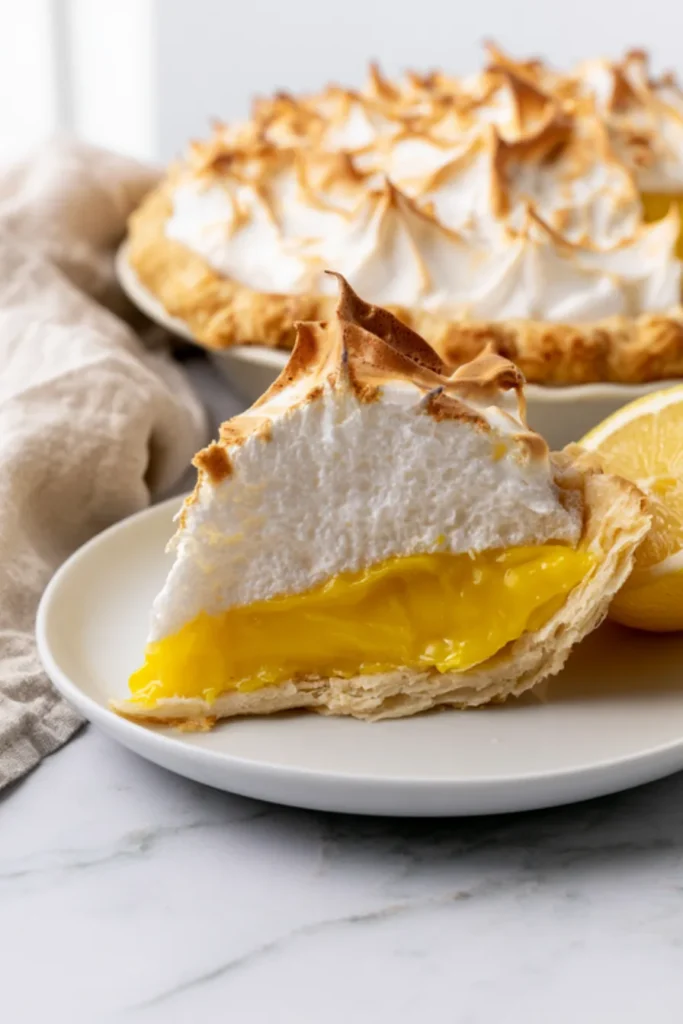
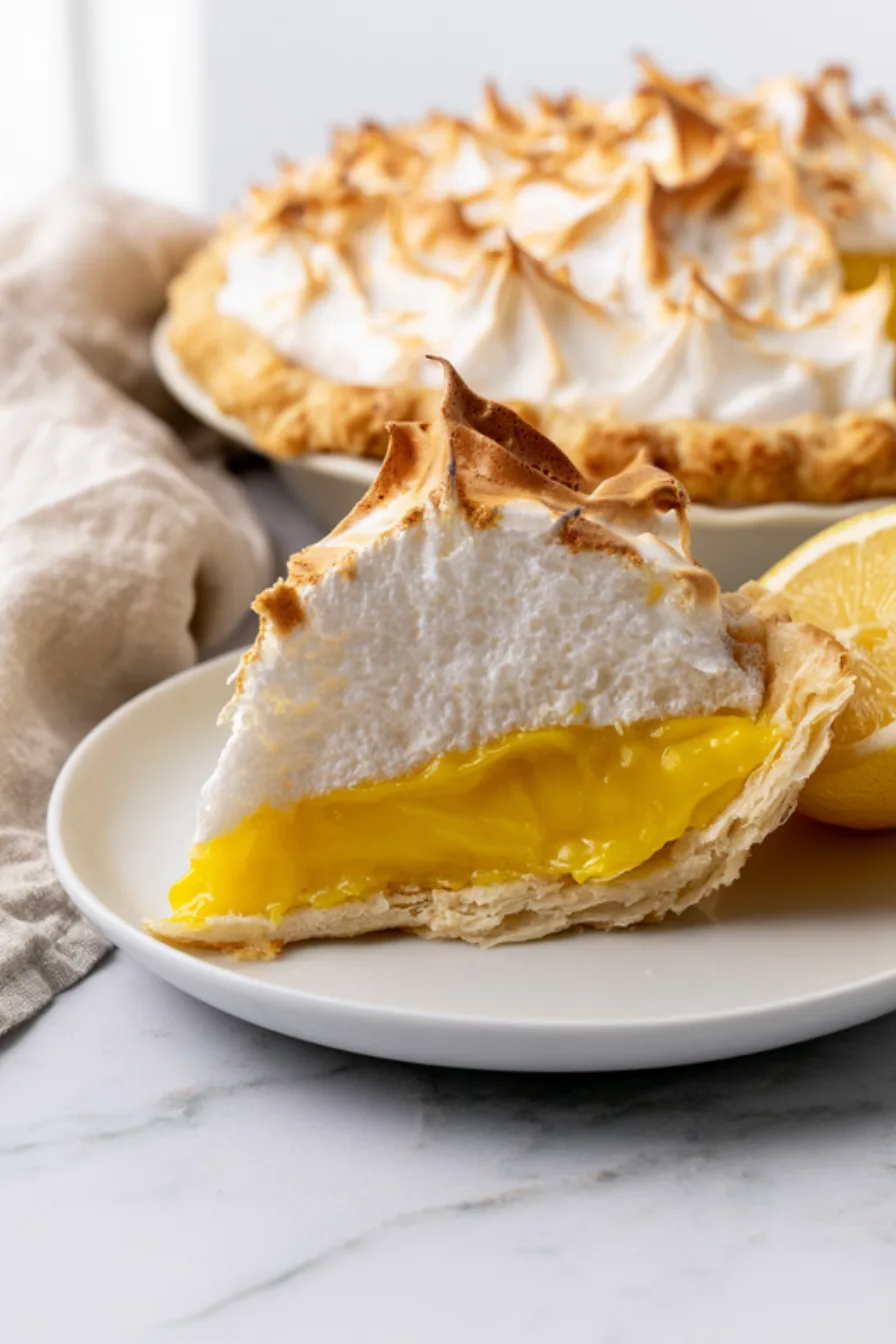
A crisp, flaky crust. A bright, tangy lemon filling that holds a clean edge when you slice it. And on top, a cloud of glossy meringue swirled into peaks and baked until the tips turn golden brown. A good lemon meringue pie is all about contrast: sharp and sweet, smooth and airy, creamy and crisp.
Getting there comes down to timing more than skill. The lemon filling is cooked on the stove and thickened with cornstarch and egg yolks, then the meringue goes on while the filling is still hot. That heat starts to cook the meringue from below, and sealing it to the crust keeps it from sliding or shrinking. The egg whites left over from the filling become the meringue, so nothing goes to waste.
Ingredients
For the crust
- 1 unbaked 9-inch deep-dish pie crust, homemade or store-bought – fully baked before filling so it stays crisp under the wet filling.
For the lemon filling
- 1 cup (200 g) granulated sugar.
- 1/3 cup (40 g) cornstarch – thickens the filling so it sets firm enough to slice.
- 1/4 tsp salt.
- 1 1/2 cups (360 ml) water.
- 1/2 cup (120 ml) fresh lemon juice and 1 tbsp finely grated lemon zest – fresh juice gives a brighter, cleaner flavor than bottled.
- 5 large egg yolks, at room temperature – add richness and the golden color. Save the whites for the meringue.
- 3 tbsp (42 g) unsalted butter, cubed – makes the filling smooth and glossy.
For the meringue
- 5 large egg whites, at room temperature – they whip faster and higher than cold whites.
- 1/2 tsp cream of tartar – stabilizes the whipped whites.
- 1/2 cup (100 g) granulated sugar mixed with 2 tsp cornstarch – the cornstarch helps keep the meringue from weeping.
- 1/2 tsp vanilla extract, optional.
How to Make It
1. Blind-bake the crust – 375°F (190°C), 20 to 25 minutes
Heat the oven to 375°F (190°C). Prick the bottom of the chilled crust with a fork, line it with parchment and fill with pie weights or dried beans. Bake for 10 minutes, remove the parchment and weights, and bake 10 to 15 minutes more. Let it cool, and lower the oven to 350°F (175°C). The crust is ready when the bottom looks dry and the edges are golden brown.
2. Cook the lemon base – medium-high heat, about 5 minutes
In a medium saucepan, whisk the sugar, cornstarch and salt, then whisk in the water and lemon juice. Cook over medium-high heat, whisking constantly, until the mixture turns from cloudy to translucent and thickens. It should coat the back of a spoon thickly and leave a trail when you drag the whisk through it.
3. Temper the yolks and finish the filling – 3 minutes
Whisk the egg yolks in a bowl. Slowly pour in about 1/4 cup of the hot lemon mixture while whisking, then whisk the warmed yolks back into the saucepan. Lower the heat to medium, bring it back to a gentle simmer and cook for 2 to 3 minutes, stirring with a spatula. Take the pan off the heat and stir in the butter and lemon zest. The filling should be thick, smooth and glossy, with large slow bubbles at the surface before you take it off the heat.
4. Fill the crust and keep it hot
Pour the hot filling into the baked crust and cover the surface with plastic wrap to keep it warm while you whip the meringue.
5. Whip the meringue – 5 to 7 minutes
In a clean, grease-free bowl, beat the egg whites and cream of tartar on medium-high until foamy. Add the sugar and cornstarch mixture one spoonful at a time, then the vanilla, and keep beating until the meringue is thick, glossy and holds stiff peaks. Rub a little between your fingers: it should feel smooth, not gritty, which means the sugar has dissolved.
6. Spread and seal – while the filling is hot
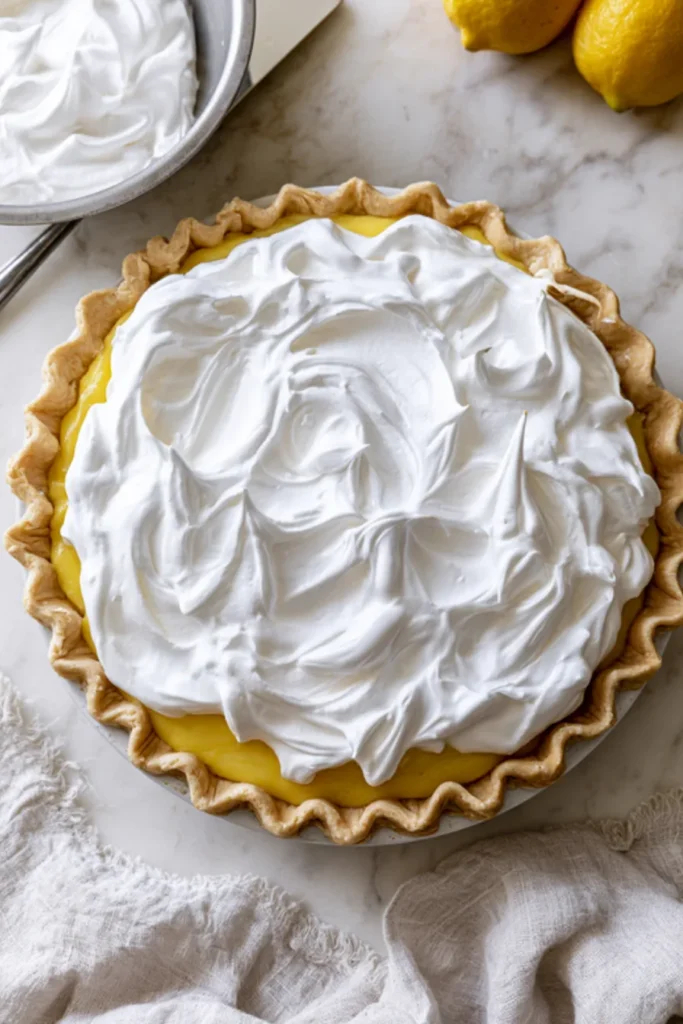
Remove the plastic wrap. Spoon the meringue onto the hot filling, starting around the edge, and spread it until it touches the crust all the way around. Pile the rest in the center and swirl it into peaks with the back of a spoon.
7. Bake – 350°F (175°C), about 15 minutes
Bake until the meringue peaks are golden brown. The ridges should be evenly toasted and the meringue should feel set, not sticky, when lightly touched.
8. Cool, then chill – at least 4 hours
Let the pie cool on a wire rack for about 1 hour, away from drafts, then refrigerate for at least 3 hours before slicing. The filling is set when the center no longer jiggles and a slice holds a clean edge.
Why This Method Works
Most lemon meringue problems come from moisture, and every step of this method is aimed at controlling it.
Cornstarch in the filling and the meringue. Cornstarch in the filling gives it enough body to slice cleanly. A small amount in the meringue sugar helps hold onto liquid that would otherwise collect between the layers.
A hot filling under the meringue. When the meringue goes onto hot filling, its underside starts to cook right away. On cold filling, the bottom of the meringue stays raw and releases liquid, which is the watery layer often called weeping.
Sealing to the crust. Meringue shrinks slightly as it bakes and cools. Anchored to the crust all the way around, it has nothing to pull away from.
Baking at 350°F. A moderate oven gives the meringue time to cook through while the peaks brown. Food safety guidance from the LSU AgCenter recommends baking meringue-topped pies at 350°F for about 15 minutes, since the egg whites are otherwise uncooked.
The same bright citrus also shows up in our glazed cranberry orange scones, if you like a tangy finish.
Mistakes to Avoid
- Undercooking the filling. If it does not simmer long enough after the yolks go in, the cornstarch never fully thickens and the filling stays runny.
- Letting the filling cool before topping. Keep it covered and hot, and have the meringue ingredients ready before you start the filling.
- A greasy bowl or a speck of yolk. Even a little fat stops egg whites from whipping. Use a clean metal or glass bowl.
- Adding the sugar too fast. Undissolved sugar leaks out as small golden beads on the surface. Add it a spoonful at a time.
- Leaving gaps at the edge. Any gap lets the meringue shrink back and slide.
- Cooling too fast. Moving the hot pie straight into the fridge can make the meringue sweat. Let it cool at room temperature first.
Storing and Serving
Lemon meringue pie is best served on the day it is made, once it has chilled and set. Slice it with a sharp knife dipped in hot water and wiped clean between cuts, so the meringue does not drag.
Keep leftovers in the refrigerator, loosely covered with a large inverted bowl or tented foil so nothing presses on the meringue. Like other egg-based pies, it should not sit at room temperature for more than 2 hours. Eat leftovers within a day or two; the meringue slowly softens and may weep a little over time. This pie does not freeze well, because the meringue turns spongy and the filling separates when thawed.
For a full dessert table, it pairs well with something rich and chocolatey like a grasshopper pie.
Frequently Asked Questions
Why is my meringue weeping?
Weeping usually means the bottom of the meringue did not cook, often because it was spread on a cooled filling, or the sugar did not fully dissolve. Spreading it on hot filling and adding the sugar slowly are the best fixes.
Can I use bottled lemon juice?
You can, but fresh juice gives a brighter, more natural lemon flavor, and you need fresh lemons for the zest anyway.
Can I make it ahead?
Bake the crust up to a day ahead and keep it covered at room temperature. The filling and meringue are best made the same day the pie is served. For an easier make-ahead dessert, a classic pumpkin pie holds better in the fridge.
Find more pies, cakes and holiday bakes among our dessert recipes.
Lemon Meringue Pie
Ingredients
Method
- Heat the oven to 375°F (190°C). Line the chilled crust with parchment and pie weights and bake 10 minutes; remove the weights and bake 10 to 15 minutes more, until golden. Cool and lower the oven to 350°F (175°C).
- In a saucepan, whisk the sugar, cornstarch and salt, then the water and lemon juice. Cook over medium-high heat, whisking, until translucent and thickened.
- Temper the egg yolks with about 1/4 cup of the hot mixture, then whisk them into the pan. Simmer over medium heat for 2 to 3 minutes, stirring. Off the heat, stir in the butter and lemon zest.
- Pour the hot filling into the crust and cover the surface with plastic wrap to keep it warm.
- Beat the egg whites and cream of tartar until foamy. Add the sugar mixed with the cornstarch one spoonful at a time, then the vanilla, and beat to stiff, glossy peaks.
- Spread the meringue over the hot filling, sealing it to the crust all the way around, and swirl into peaks.
- Bake at 350°F (175°C) for about 15 minutes, until the peaks are golden brown.
- Cool on a wire rack for about 1 hour, then refrigerate for at least 3 hours before slicing.
Notes


Leave a Reply