
| Prep | 20 minutes |
| Cook | about 3 hours 40 minutes (mostly hands-off in the oven) |
| Total | about 4 hours |
| Serves | 6 |
| Equipment | 6- to 7-quart Dutch oven with a tight lid, large pot for the potatoes, potato masher, tongs |
If your pot roast has ever come out dry, stringy and tough even after hours in the oven, the problem is rarely the recipe. It is usually the heat. Chuck roast needs a long, gentle braise in a covered pot so that its connective tissue has time to melt. Push the temperature too high and the meat tightens and dries out before it ever gets tender.
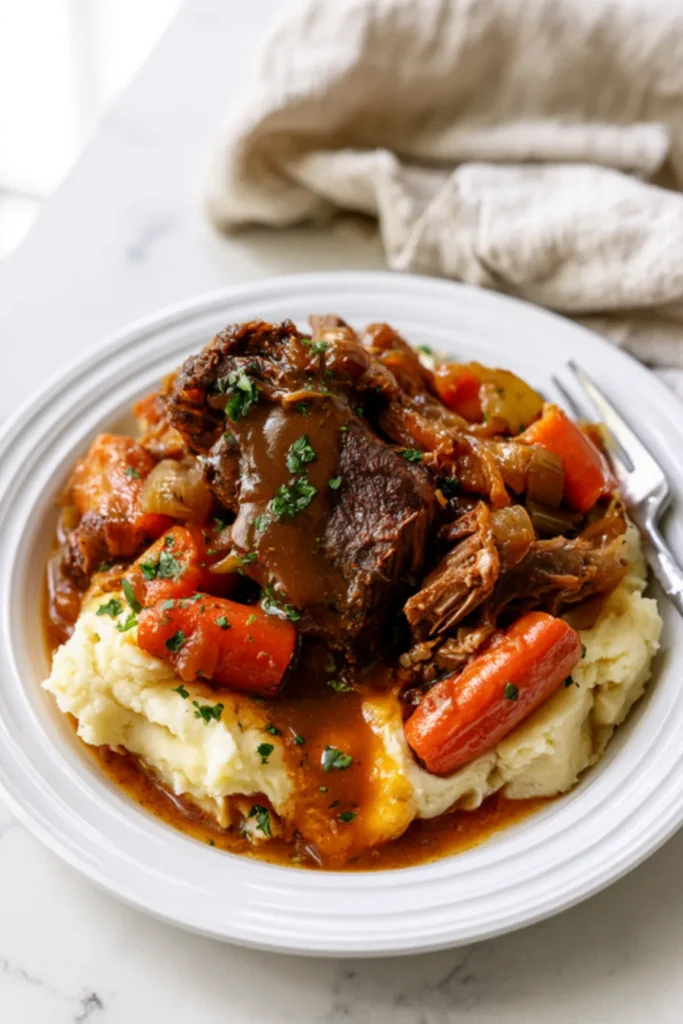
This version keeps the oven low at 300°F and builds flavor in layers: a deep sear on the beef, onions cooked until golden, tomato paste and red wine to deglaze, then beef broth and herbs for the long braise. Carrots and celery go in for the last hour so they come out soft but still whole. Everything is served over creamy garlic mashed potatoes, with the braising liquid spooned over the top as a simple gravy.
Ingredients
For the pot roast
- 3 lb (1.4 kg) boneless beef chuck roast – chuck has the marbling and connective tissue that turn silky in a long braise.
- 2 tsp kosher salt and 1 tsp black pepper, plus more to taste.
- 1 tbsp olive oil or other neutral oil for searing.
- 1 large yellow onion, sliced.
- 5 cloves garlic, chopped.
- 2 tbsp tomato paste – adds depth and a little color to the gravy.
- 3/4 cup (180 ml) dry red wine – or replace it with more beef broth plus 1 tbsp red wine vinegar.
- 2 to 3 cups (480 to 720 ml) low-sodium beef broth – low-sodium keeps the reduced liquid from getting too salty.
- 1 tbsp Worcestershire sauce.
- 4 sprigs fresh thyme (or 1/2 tsp dried), 1 small sprig rosemary and 1 bay leaf.
- 1 lb (450 g) carrots, peeled and cut into 2-inch pieces.
- 2 ribs celery, cut into 2-inch pieces.
For the garlic mashed potatoes
- 2 1/2 lb (1.1 kg) Yukon Gold potatoes, peeled and cut into 2-inch chunks – their naturally buttery texture mashes smooth without turning gluey.
- 6 cloves garlic, peeled and left whole.
- 4 tbsp (57 g) butter.
- 3/4 cup (180 ml) whole milk, warmed, plus more as needed.
- Salt to taste.
Optional, to thicken the gravy
- 2 tbsp softened butter and 2 tbsp all-purpose flour.
How to Make It
1. Season the beef – 5 minutes
Heat the oven to 300°F (150°C). Pat the chuck roast completely dry with paper towels and season it on all sides with the salt and pepper. A dry surface browns; a wet one steams.
2. Sear – medium-high, 10 to 12 minutes
Heat the oil in the Dutch oven until it shimmers. Sear the roast without moving it for 4 to 5 minutes per side, then hold it with tongs to brown the edges briefly. Move it to a plate. Look for a deep brown crust, not a gray one. If the pan smokes heavily, lower the heat slightly.
3. Cook the onion and aromatics – medium, 15 minutes
Add the onion to the same pot and cook, stirring now and then, until soft and golden, about 12 minutes. Stir in the garlic for 1 minute, then the tomato paste for 2 minutes more. The tomato paste should darken from bright red to brick red and start to stick to the bottom of the pot.
4. Deglaze with wine – 5 minutes
Pour in the red wine and scrape up all the browned bits from the bottom of the pot. Simmer until reduced by about half. The sharp alcohol smell should fade and the liquid should look slightly syrupy.
5. Braise in the oven – 300°F (150°C), 2 hours
Return the roast and any juices to the pot. Add the Worcestershire sauce, thyme, rosemary and bay leaf, then pour in enough broth to come about halfway up the side of the roast. Bring to a gentle simmer on the stove, cover tightly and move the pot to the oven. Half-submerged is the goal; the top of the roast braises in steam under the lid.
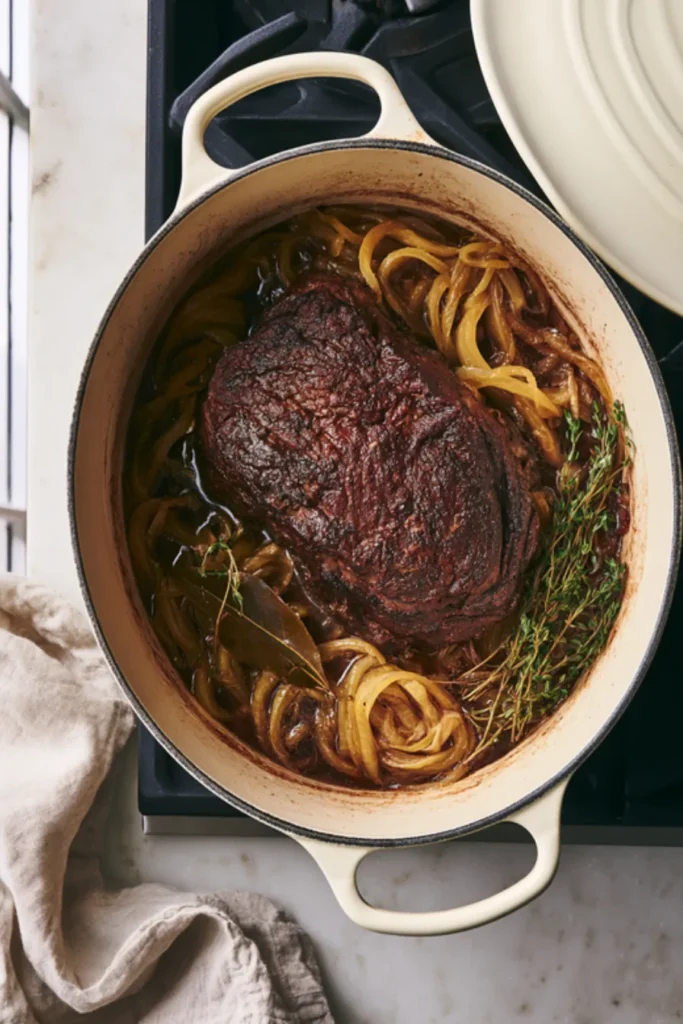
6. Add the vegetables – 1 to 1 1/2 hours more
After 2 hours, tuck the carrots and celery around the roast so they sit mostly in the liquid. Cover and return to the oven. Start checking after 1 hour. The roast is done when a fork slides in with almost no resistance and the meat pulls apart easily. If it still resists, give it another 30 minutes and check again.
7. Make the garlic mashed potatoes – 30 minutes
While the roast finishes, put the potatoes and whole garlic cloves in a large pot, cover with cold water by an inch and add a generous pinch of salt. Bring to a boil and simmer until a knife slides through the potatoes easily, 15 to 20 minutes. Drain well and return to the warm pot for a minute to steam off excess water. Mash the potatoes and garlic with the butter, then stir in the warm milk a little at a time. Season with salt. The mash should be smooth and creamy, and the boiled garlic should have melted right into it.
8. Finish the gravy – 10 minutes
Move the beef and vegetables to a platter and cover loosely with foil. Discard the herb stems and bay leaf, then skim off as much fat as you can from the surface of the liquid. Taste and add salt if needed. Serve it as it is, or for a thicker gravy, bring it to a simmer, mash the softened butter and flour together into a paste and whisk it in a little at a time. Simmer for 5 to 8 minutes. The gravy is ready when it lightly coats the back of a spoon.
9. Serve
Spoon the mashed potatoes onto plates, add chunks of pot roast and vegetables, and pour the gravy over everything. Finish with chopped parsley if you like.
Why Low and Slow Makes It Tender
Chuck comes from the shoulder, a hard-working muscle with plenty of collagen, the connective tissue that holds the muscle fibers together. Cooked quickly with dry heat, collagen gets tough and chewy. Cooked slowly with moisture, it gradually breaks down into gelatin, which is what gives a good pot roast its soft, shreddable texture and its silky braising liquid. University of Nebraska–Lincoln Extension explains exactly this, and recommends cooking chuck and round roasts for several hours in a slow cooker or a low oven, tightly covered with a lid or foil.
That is why this recipe uses a heavy pot with a tight lid and a 300°F oven rather than a hotter one. The lid traps steam, so the part of the roast above the liquid braises instead of drying out, and the low, even heat keeps the liquid at a gentle simmer instead of a hard boil, which would squeeze moisture out of the meat.
Tips for the Best Pot Roast
- Don’t skip the sear. The browned crust and the bits it leaves in the pot are where most of the flavor of the gravy comes from.
- Use a pot that fits. A Dutch oven only a little bigger than the roast keeps the liquid level up without needing extra broth, which would dilute the flavor.
- Judge by texture, not the clock. Every roast is different. Test with a fork rather than pulling it at an exact time.
- Rest before serving. Ten minutes under foil while you finish the gravy lets the juices settle back into the meat.
Make Ahead and Storage
Pot roast is even better the next day. Cool it, then refrigerate the meat, vegetables and braising liquid together in a covered container for up to 3 to 4 days; the fat will set on top and is easy to lift off. Reheat gently, covered, on the stove over low heat with a splash of broth. The meat and liquid also freeze well for up to 3 months. Mashed potatoes keep in the fridge for 3 to 4 days and reheat best with a little extra milk and butter.
Leftover pot roast makes great sandwiches on slices of no-knead Dutch oven bread, or shred it into tacos.
Frequently Asked Questions
Can I make it without wine?
Yes. Replace the wine with the same amount of beef broth and add 1 tablespoon of red wine vinegar or balsamic vinegar at the end for a little acidity.
Can I make pot roast in a slow cooker?
Yes. Sear the beef and cook the onions, garlic, tomato paste and wine on the stove as described, then move everything to the slow cooker with the broth, herbs and vegetables. Cook on low for 8 to 9 hours. For a similar slow-cooker dinner with smaller pieces of beef, see the crockpot beef stew.
Why is my pot roast still tough?
It usually needs more time. Tough pot roast is almost always undercooked rather than overcooked; the collagen has not broken down yet. Cover it and keep braising in 30-minute steps until it is fork-tender.
What sides go with pot roast?
The garlic mashed potatoes are the classic pairing. For a holiday-style table, add the cheesy green bean casserole, or swap the mash for beef tallow roasted potatoes. You will find more ideas among the dinner recipes.
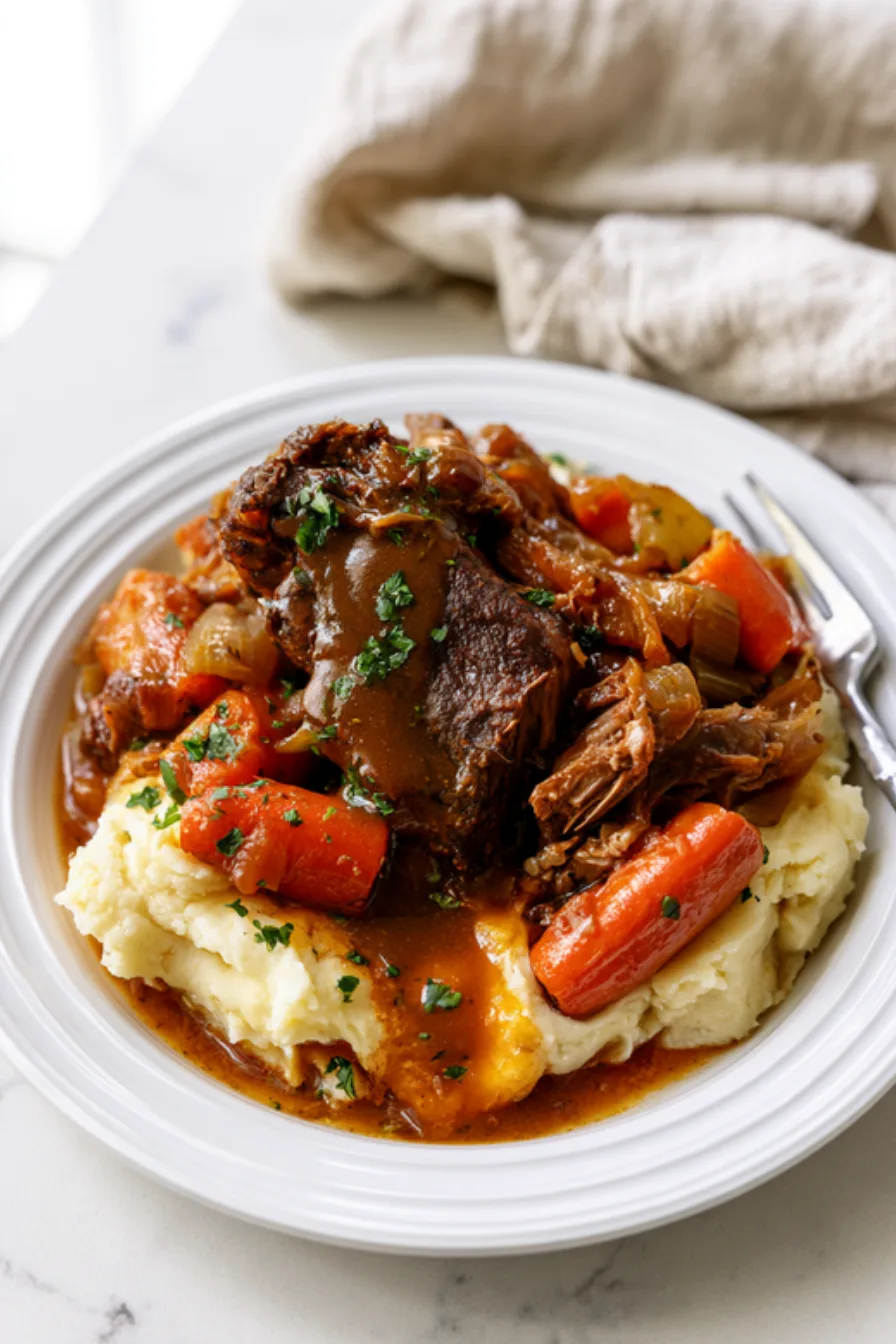
Pot Roast with Garlic Mashed Potatoes
Ingredients
Method
- Heat the oven to 300°F (150°C). Pat the roast dry and season all over with salt and pepper.
- Heat the oil in a Dutch oven over medium-high heat. Sear the roast 4 to 5 minutes per side until deeply browned, then brown the edges. Set aside.
- Lower the heat to medium. Cook the onion until soft and golden, about 12 minutes. Add the garlic for 1 minute, then the tomato paste for 2 minutes.
- Add the wine, scrape up the browned bits and simmer until reduced by about half.
- Return the roast and juices to the pot. Add the Worcestershire sauce, thyme, rosemary and bay leaf, and enough broth to come halfway up the roast. Bring to a simmer, cover and braise in the oven for 2 hours.
- Add the carrots and celery around the roast. Cover and braise 1 to 1 1/2 hours more, until the meat is fork-tender.
- Meanwhile, simmer the potatoes and garlic in salted water until tender, 15 to 20 minutes. Drain, then mash with the butter and warm milk. Season with salt.
- Transfer the beef and vegetables to a platter. Discard the herbs, skim the fat and season the liquid. For a thicker gravy, whisk in the butter-flour paste and simmer 5 to 8 minutes.
- Serve the pot roast and vegetables over the mashed potatoes with the gravy.
Notes


Leave a Reply