
| Prep | 20 minutes |
| Cook | about 55 minutes |
| Resting | 10 minutes |
| Total | about 1 hour 25 minutes |
| Serves | 10 |
| Equipment | large pot, large saucepan or Dutch oven, whisk, deep 9×13-inch (23×33 cm) baking dish, cast iron skillet, box grater, instant-read thermometer |
Baked mac and cheese has a habit of letting people down. The sauce that looked silky on the stove turns grainy in the oven, puddles of oil form around the edges, or the pasta soaks up every drop of liquid and the whole dish sets into a dry, sliceable block. When you are about to crown it with a good steak, that is the last thing you want.
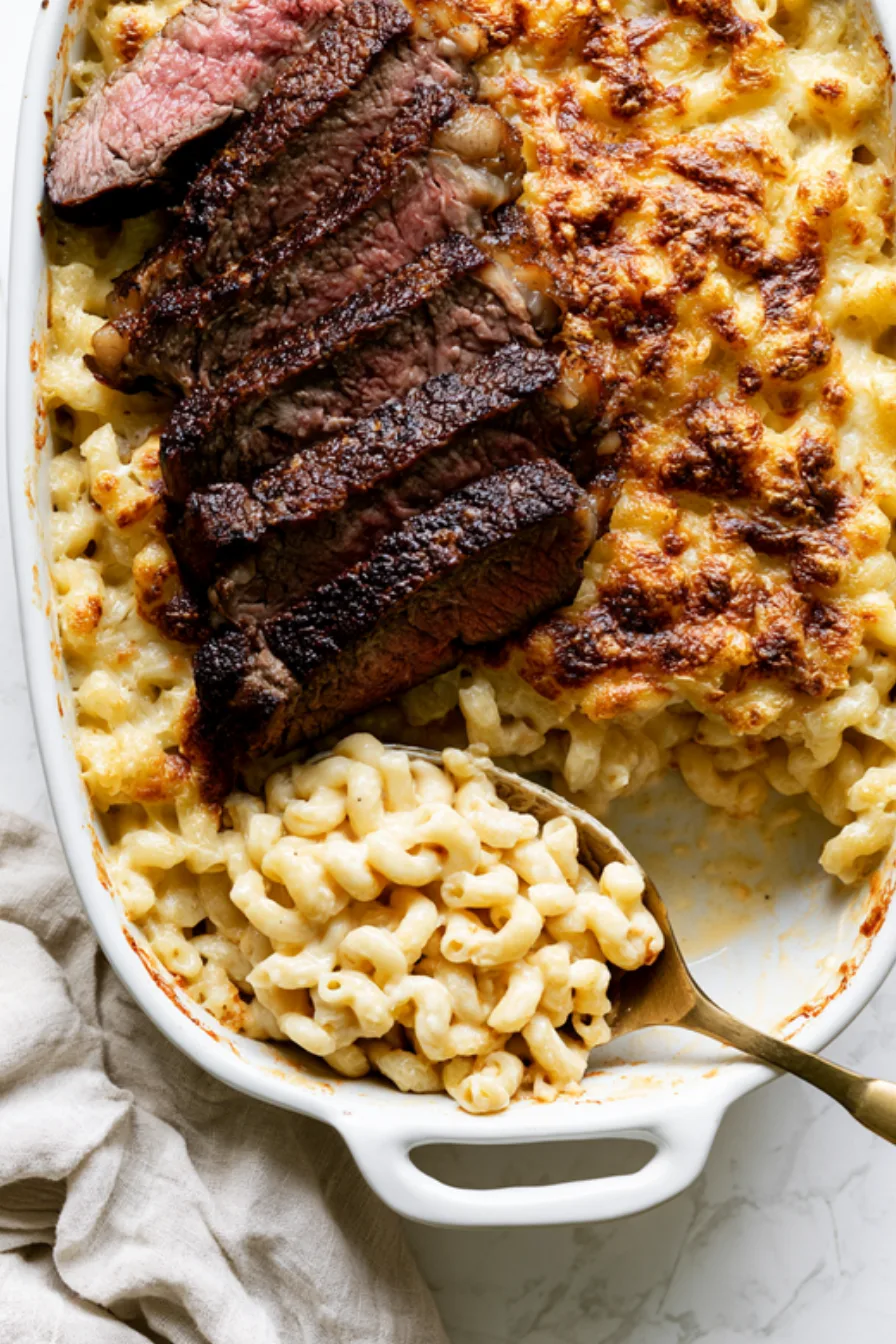
This steak mac and cheese is built to avoid all three problems. The sauce starts with a butter and flour roux and a can of evaporated milk, which keeps the cheese smooth even after half an hour in the oven. The pasta is pulled from the water early, the sauce is left looser than you would think, and two thick layers of cheese bake into a crisp, golden top. A seared, butter-basted ribeye sliced over the top turns a classic side dish into a full, very indulgent dinner.

Ingredients
For the mac and cheese
- 1 lb (450 g) cavatappi – the ridged corkscrews trap sauce better than elbows.
- 3 tbsp (45 g) butter and 3 tbsp (25 g) all-purpose flour – the roux that thickens and stabilizes the sauce.
- 1 can (12 oz / 354 ml) evaporated milk – the key to a smooth sauce that does not break (see below).
- 2 cups (480 ml) heavy cream.
- 1 tsp each garlic powder, onion powder and smoked paprika.
- 1 tsp chicken bouillon powder or paste – deep savory seasoning.
- 1/2 tbsp Dijon mustard – sharpens the cheese flavor without tasting of mustard.
- About 1 cup (240 ml) reserved pasta water, to loosen the sauce.
Cheese (2 1/2 lb / 1.1 kg total, grated from blocks)
- 16 oz (450 g) low-moisture mozzarella – the stretch.
- 12 oz (340 g) Colby Jack – mild and very meltable.
- 8 oz (225 g) sharp cheddar – the classic tang.
- 4 oz (115 g) Fontina – nutty and creamy; Gruyère or Gouda also work.
For the steak
- 1 large ribeye or New York strip (about 1 lb / 450 g, 1 to 1 1/2 inches / 2.5 to 4 cm thick).
- Salt, black pepper and garlic powder.
- 1 tbsp neutral oil and 1 tbsp butter.
How to Make It
1. Grate the cheese and cook the pasta – 15 minutes
Heat the oven to 350°F (175°C). Grate all the cheese, keeping 4 oz (115 g) each of mozzarella, Colby Jack, cheddar and Fontina together for the sauce (16 oz total) and combining the rest (24 oz) for layering. Boil the cavatappi in well-salted water for 1 minute less than the package says for al dente, scoop out about 1 cup of pasta water, then drain. The pasta should still have a firm bite in the center; it finishes cooking in the oven.
2. Make the roux – medium heat, 2 minutes
Melt the butter in a large saucepan or Dutch oven, whisk in the flour and cook, whisking, for 2 minutes. The roux should be smooth, bubbling and pale blond, with a slightly nutty smell.
3. Build the sauce – medium heat, 5 to 7 minutes
Slowly whisk in the evaporated milk, then the cream. Add the garlic powder, onion powder, smoked paprika, bouillon and Dijon and simmer for 3 to 5 minutes, whisking often. The sauce should be smooth and lightly thickened, enough to coat the back of a spoon.
4. Melt in the cheese – low heat, 3 to 4 minutes
Turn the heat to low and add the 16 oz of sauce cheese a handful at a time, stirring until each addition melts before adding the next. The sauce should be glossy and completely smooth, with no strings of unmelted cheese. If it looks oily or grainy, the heat is too high.
5. Combine with the pasta – 2 minutes
Fold the pasta into the sauce. If it looks thick, stir in reserved pasta water a little at a time until the mixture is very creamy and loose. It should look almost too saucy, like soup clinging to the pasta. The pasta absorbs a lot of liquid in the oven.
6. Layer – 3 minutes
Spread half the mac and cheese in the baking dish and scatter 8 oz (225 g) of the reserved cheese over it. Add the rest of the mac and cheese and cover with the remaining 16 oz (450 g) of cheese. The top layer should hide the pasta completely.

7. Bake and broil – 350°F (175°C), 25 to 30 minutes, then 1 to 3 minutes under the broiler
Bake uncovered until bubbling at the edges. Switch the oven to broil and broil for 1 to 3 minutes, watching closely, until the top is golden with crisp brown spots. Stay by the oven while it broils; the cheese goes from golden to burnt in seconds.
8. Sear the steak – high heat, 3 to 4 minutes per side
While the mac and cheese bakes, pat the steak dry and season generously with salt, pepper and garlic powder. Heat the oil in a cast iron skillet until shimmering, add the steak and sear for 3 to 4 minutes per side, until deeply browned. Add the butter for the last minute and spoon it over the steak as it foams. Check the temperature in the thickest part (see below), then let the steak rest on a board for 8 to 10 minutes. The crust should be dark brown all over, and the butter should smell nutty, not burnt.
9. Rest, slice and serve – 5 to 10 minutes
Let the mac and cheese rest for 5 to 10 minutes so the sauce settles. Slice the steak thinly against the grain and pile it on top. Each spoonful should pull long strings of cheese, with a creamy center under the crisp top.
Why Evaporated Milk Keeps the Sauce Smooth
A cheese sauce breaks when the proteins in the cheese clump together and squeeze out their fat, leaving a grainy sauce and greasy pools. Long baking makes this more likely, because the sauce keeps heating and slowly loses water.
Evaporated milk is milk with about 60 percent of its water removed, so it has a higher concentration of milk proteins than regular milk. Those proteins help keep fat droplets spread through the sauce, acting a little like the emulsifying salts in processed cheese. Together with the flour in the roux, which also helps hold the sauce together, they let you use real, sharp cheeses without the sauce turning grainy in the oven.
Two more habits help. Grate the cheese from blocks, since pre-shredded cheese is coated with starch and anti-caking agents that keep it from melting smoothly. And add the cheese over low heat, in handfuls, never letting the sauce boil once the cheese is in.
The Four-Cheese Blend
Each cheese has a job. Mozzarella brings the stretch, Colby Jack melts easily and adds mild creaminess, sharp cheddar gives the classic tangy flavor, and Fontina adds a nutty depth. Mixing them gives a sauce that is more interesting than any single cheese, and the layered cheese on top browns into a crisp, lacy crust.
You can swap within the same families: Monterey Jack for Colby Jack, Gruyère or smoked Gouda for Fontina, white cheddar for orange. Keep at least half the total as easy melters such as mozzarella, Jack and young cheddar. Very aged, dry cheeses like Parmesan add flavor but can make the sauce grainy if they make up too much of the blend.
Cooking the Steak
Pat the steak very dry before seasoning; surface moisture prevents a good crust. Let the skillet heat until the oil shimmers, and do not move the steak for the first few minutes so it can brown.
Many cooks take a steak off the heat at about 125 to 130°F (52 to 54°C) for medium-rare, letting the temperature climb a few degrees as it rests. For food safety, FoodSafety.gov lists 145°F (63°C) with a 3-minute rest as the safe minimum internal temperature for beef steaks. An instant-read thermometer in the thickest part is the only reliable way to know where you are.
Resting the steak for 8 to 10 minutes before slicing gives the juices time to settle, so they stay in the meat instead of running onto the board. Slice against the grain, across the visible lines of muscle, for the most tender bites.
Frequently Asked Questions
Can I make it ahead?
Yes. Assemble the mac and cheese up to a day ahead, cover and refrigerate. Let it sit at room temperature for 30 minutes, then bake, adding 10 to 15 minutes to the baking time before broiling. Cook the steak just before serving.
Can I use a different pasta?
Any short pasta with ridges or curves works: elbows, shells, rigatoni or campanelle.
Why is my baked mac and cheese dry?
Usually the sauce was too thick when it went into the oven, or the pasta was fully cooked. Undercook the pasta by a minute and make the sauce looser than seems right.
How do I store and reheat leftovers?
Refrigerate the mac and cheese and steak separately in airtight containers for up to 3 to 4 days. Reheat portions covered in a 350°F (175°C) oven or in the microwave with a splash of milk stirred in to bring back the creaminess. Warm the steak briefly so it does not overcook.
For more cheesy comfort food, try the steak grilled cheese, the vodka sauce baked ziti or the Cajun shrimp and sausage pasta. For a fun cheesy appetizer, there are the potato cheese balls, and you can find more ideas among the dinner recipes.
Steak Mac and Cheese
Ingredients
Method
- Heat the oven to 350°F (175°C). Grate the cheese: keep 4 oz each of mozzarella, Colby Jack, cheddar and Fontina for the sauce (16 oz) and combine the rest (24 oz) for layering.
- Cook the cavatappi in salted water 1 minute less than al dente. Reserve 1 cup pasta water and drain.
- Melt the butter in a large saucepan, whisk in the flour and cook 2 minutes. Slowly whisk in the evaporated milk, then the cream. Add the garlic powder, onion powder, smoked paprika, bouillon and Dijon and simmer 3 to 5 minutes.
- Lower the heat and melt in the 16 oz of sauce cheese a handful at a time until smooth.
- Fold in the pasta, loosening with pasta water until very creamy.
- Spread half in a 9x13-inch dish, top with 8 oz of the reserved cheese, add the remaining pasta and cover with the last 16 oz of cheese.
- Bake uncovered 25 to 30 minutes, until bubbling, then broil 1 to 3 minutes until golden and crisp, watching closely.
- Meanwhile, season the steak and sear in hot oil 3 to 4 minutes per side. Add the butter and baste for the last minute. Check the temperature (USDA recommends 145°F / 63°C with a 3-minute rest) and rest 8 to 10 minutes.
- Rest the mac and cheese 5 to 10 minutes, slice the steak against the grain and pile it on top.
Notes
Leave a Reply