
Prep: 10 minutes · Cook: 55 minutes · Total: 1 hour 5 minutes · Serves: 2 large sandwiches · Equipment: 12-inch (30 cm) cast iron or heavy skillet with a lid, instant-read thermometer, sharp knife
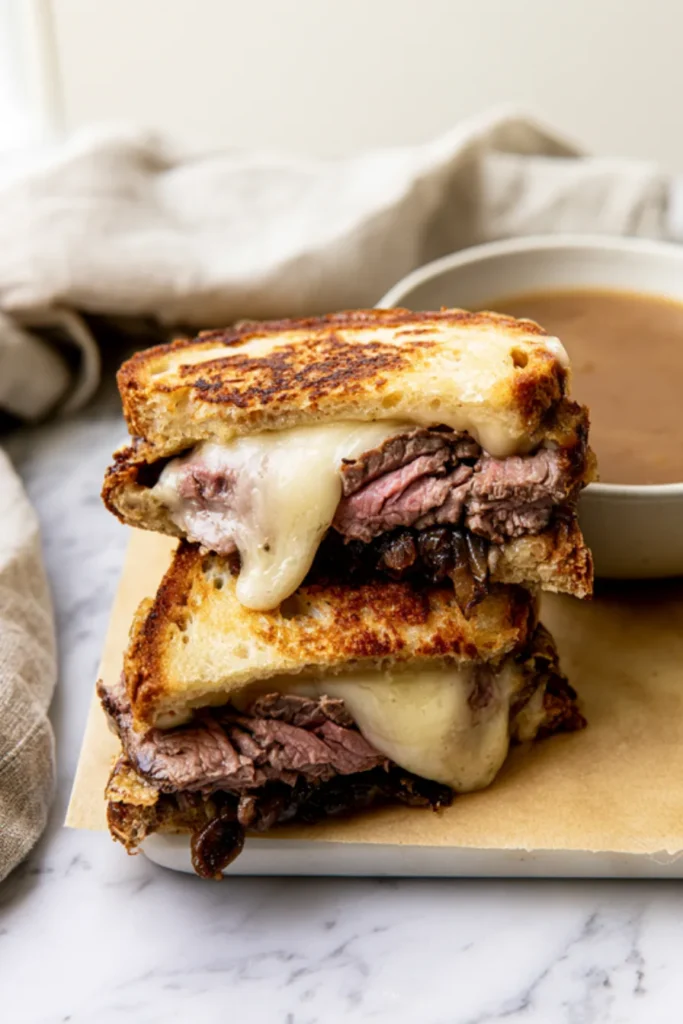
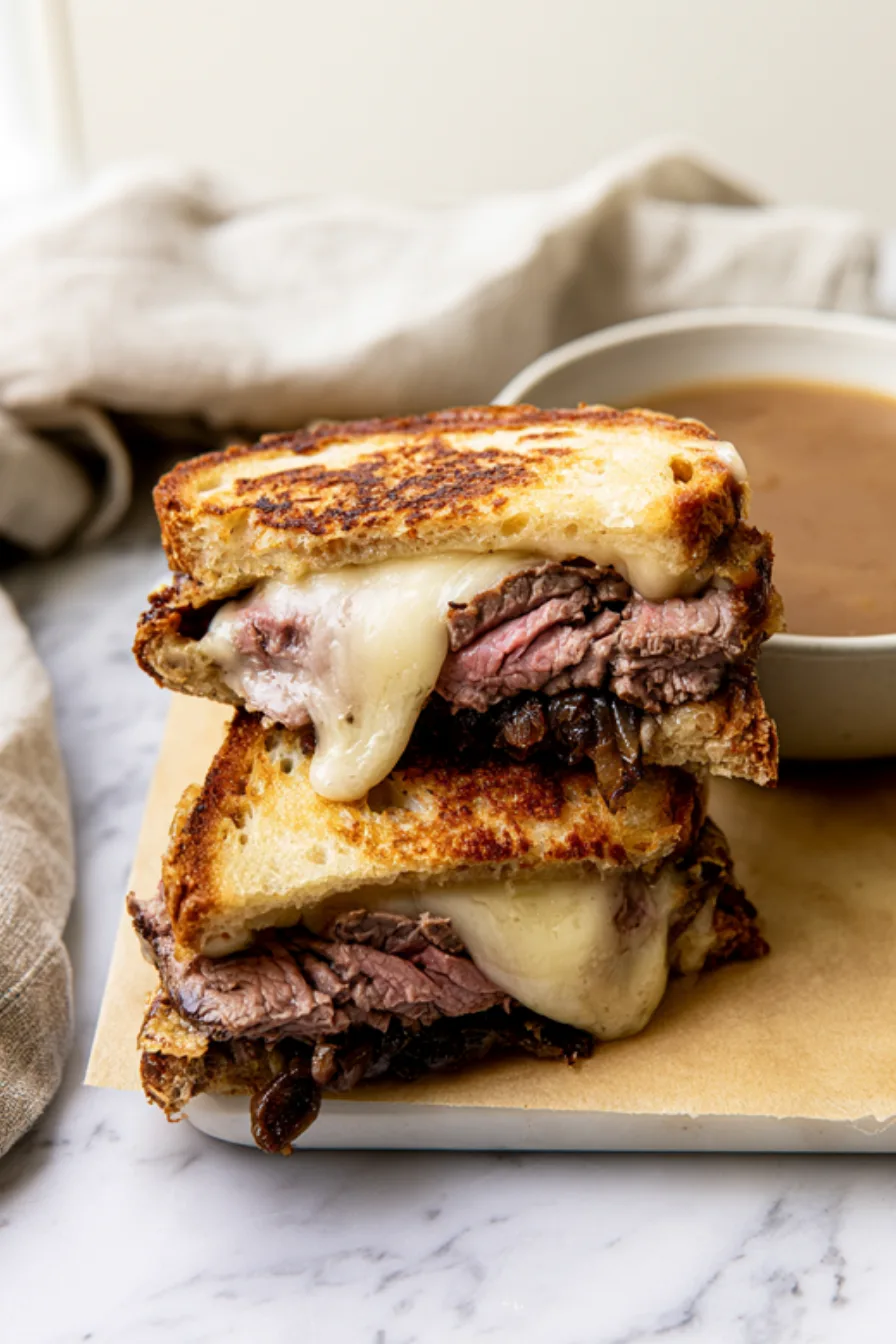
Most steak sandwiches are built like a sub: a soft roll, a pile of meat, cheese laid on top. This one goes the other way. It starts from a classic grilled cheese, with thick sourdough buttered on the outside and toasted slowly in a skillet, and puts thin slices of seared steak and a layer of deep brown caramelized onions inside. The cheese goes on both sides of the filling, so it melts into the bread and holds everything together when you cut it.
The flavours are the ones in a bowl of French onion soup: sweet onions, beef and nutty Gruyère. That is why a cup of the soup on the side, for dipping, is the natural partner. Everything happens in one skillet, in three stages: onions first, then the steak, then the sandwiches.
Ingredients
For the caramelized onions
- 2 medium yellow onions, thinly sliced – yellow onions have the right balance of sweetness and sharpness for slow cooking.
- 2 tbsp butter – for flavour and colour.
- A pinch of salt – helps the onions release their water early.
- 1 tsp Worcestershire sauce – a savoury, meaty edge that ties the onions to the steak.
- 1/2 tsp fresh thyme leaves, or a pinch of dried – the herb of French onion soup.
For the steak
- 1 ribeye or New York strip steak, about 12 oz (340 g) and 1 inch (2.5 cm) thick – both have enough marbling to stay juicy when sliced thin.
- Salt and black pepper – generously.
- 1 tbsp neutral oil with a high smoke point – for the sear.
For the sandwiches
- 4 thick slices sourdough or a country loaf – sturdy enough to hold a heavy filling without going soggy.
- 2 tbsp softened butter – spread on the outside of the bread. Mayonnaise also works and browns evenly.
- 4 oz (115 g) Gruyère, sliced or coarsely grated – see the cheese section for alternatives.
How to Make It
1. Caramelize the onions – medium, 30 to 35 minutes
Melt the butter in the skillet over medium heat. Add the onions and a pinch of salt and stir to coat. Cook, stirring every few minutes, for 30 to 35 minutes. Whenever brown bits start to stick to the bottom, add a tablespoon of water and scrape them up. Stir in the Worcestershire and thyme for the last minute, then move the onions to a bowl. They should be soft, jammy and a deep amber brown, about a quarter of their raw volume.
2. Sear the steak – high, 4 to 5 minutes per side
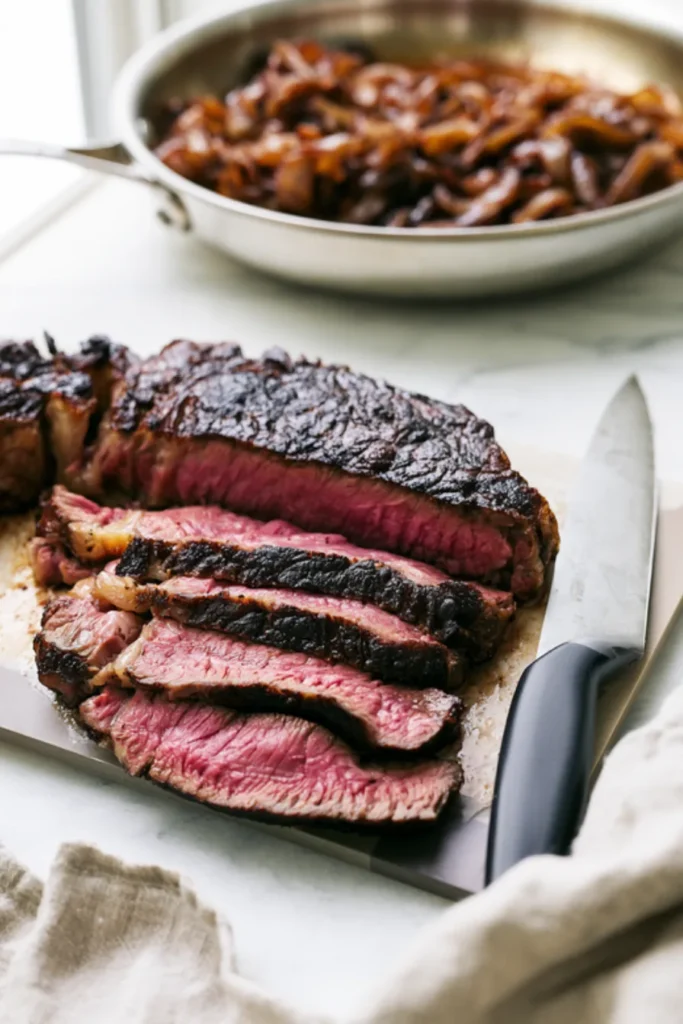
Pat the steak dry and season both sides well with salt and pepper. Wipe out the skillet, heat it over high heat until it just begins to smoke, then add the oil and the steak. Cook without moving it for 4 to 5 minutes, flip and cook another 4 to 5 minutes for medium-rare. Check the thickest part with a thermometer: around 130°F (54°C) for medium-rare. The USDA’s safe minimum for beef steaks is 145°F (63°C) with a 3-minute rest, so cook it longer if you follow that guideline. The crust should be dark brown and release easily from the pan.
3. Rest and slice – 10 minutes
Move the steak to a cutting board and leave it for 10 minutes. Then slice it as thinly as you can, across the grain. The slices should bend without tearing and show short muscle fibres on the cut face.
4. Build the sandwiches – 5 minutes
Butter one side of each slice of bread. Turn two slices butter side down and layer a quarter of the cheese on each, then half the steak, half the onions and another quarter of the cheese. Close with the remaining bread, butter side up. Cheese should be the first and last layer touching the bread on both sides.
5. Grill – medium-low, 3 to 4 minutes per side
Wipe out the skillet and set it over medium-low heat. Add the sandwiches and cook for 3 to 4 minutes, until the bottom is deep golden. Flip carefully with a wide spatula, cover the pan with a lid and cook another 3 to 4 minutes, so the trapped heat melts the cheese all the way through. Rest 1 minute, then cut in half. The bread should be crisp and evenly golden, and the cheese should run when you cut the sandwich.
Choosing the Cheese
Gruyère is the classic choice here because it is the cheese on top of French onion soup, and its nutty flavour pairs well with sweet onions. It is not the only option. What matters is that the cheese melts smoothly and does not overpower the beef.
| Cheese | How it melts | What it brings |
|---|---|---|
| Gruyère | Smooth and creamy | Nutty and savoury, the French onion soup flavour |
| Provolone | Soft and stretchy | Mild, the classic steak sandwich cheese |
| Swiss (Emmental) | Melts well, slightly stretchy | Mild and nutty, a cheaper stand-in for Gruyère |
| Young white cheddar | Melts well; aged cheddar can turn oily | Sharper, more assertive |
| Low-moisture mozzarella | Very stretchy | Mostly texture, little flavour; best mixed with another cheese |
A half-and-half mix of Gruyère and provolone gives you both the flavour and the stretch.
Serving It with French Onion Soup
Dipping the sandwich into French onion soup is like having two classics on one plate: the broth soaks into the toasted crust, and the onions in the bowl echo the ones in the sandwich. Make the soup ahead with this restaurant-style French onion soup; it reheats well, so the sandwiches are the only thing you cook to order. If onion soup feels like too much onion for one meal, a roasted butternut squash soup is a sweeter alternative for dipping.
On a weekend, it also works on its own with a crisp salad, or as part of a cosy spread with Nashville hot mozzarella sticks.
Frequently Asked Questions
Can I use leftover steak?
Yes, and it is one of the best uses for it. Slice it thinly while it is cold, which is easier, and let it come to room temperature for 15 minutes before building the sandwiches so the centre warms through while the bread toasts.
Can I make the onions ahead?
Yes. Caramelized onions keep in the refrigerator for several days in a closed container. Warm them briefly in the skillet before assembling, or the cold onions will stop the cheese from melting.
Why medium-low heat for the sandwiches?
A thick sandwich with a cold filling needs time for the heat to reach the middle. On high heat, the bread burns before the cheese melts. Covering the pan after the flip traps the heat and finishes the melt.
For another hearty beef dinner, try the crockpot beef stew, or browse all the dinner recipes.
Steak Grilled Cheese
Ingredients
Method
- Melt the butter in a skillet over medium heat. Add the onions and a pinch of salt and cook, stirring every few minutes, for 30 to 35 minutes until deep amber and jammy, adding a tablespoon of water to scrape up any browned bits. Stir in the Worcestershire and thyme for the last minute. Move to a bowl.
- Pat the steak dry and season well with salt and pepper. Wipe the skillet, heat over high heat until it just smokes, add the oil and sear the steak 4 to 5 minutes per side for medium-rare (about 130°F / 54°C). The USDA safe minimum for beef steaks is 145°F (63°C) with a 3-minute rest.
- Rest the steak 10 minutes, then slice it thinly against the grain.
- Butter one side of each bread slice. On two slices, butter side down, layer a quarter of the cheese, half the steak, half the onions and another quarter of the cheese. Top with the remaining bread, butter side up.
- Wipe the skillet and cook the sandwiches over medium-low heat 3 to 4 minutes until golden. Flip, cover with a lid and cook another 3 to 4 minutes until the cheese is melted. Rest 1 minute, cut in half and serve with French onion soup for dipping.