
Prep: 25 minutes · Cook: 1 hour 10 minutes · Cooling: 35 minutes · Total: 2 hours 10 minutes · Serves: 10 · Equipment: 9×5-inch (23×13 cm) loaf pan, medium skillet, rimmed baking sheet, aluminum foil
Two cans of refrigerated biscuits, three apples and a loaf pan. That is the base of this apple pie pull-apart bread, and it is the reason it works on a weekday: no yeast, no rising, no rolling pin. Each biscuit is split in half, dipped in melted butter, rolled in cinnamon sugar and stood on its edge in the pan, with spoonfuls of a quick stovetop apple filling tucked between the layers.
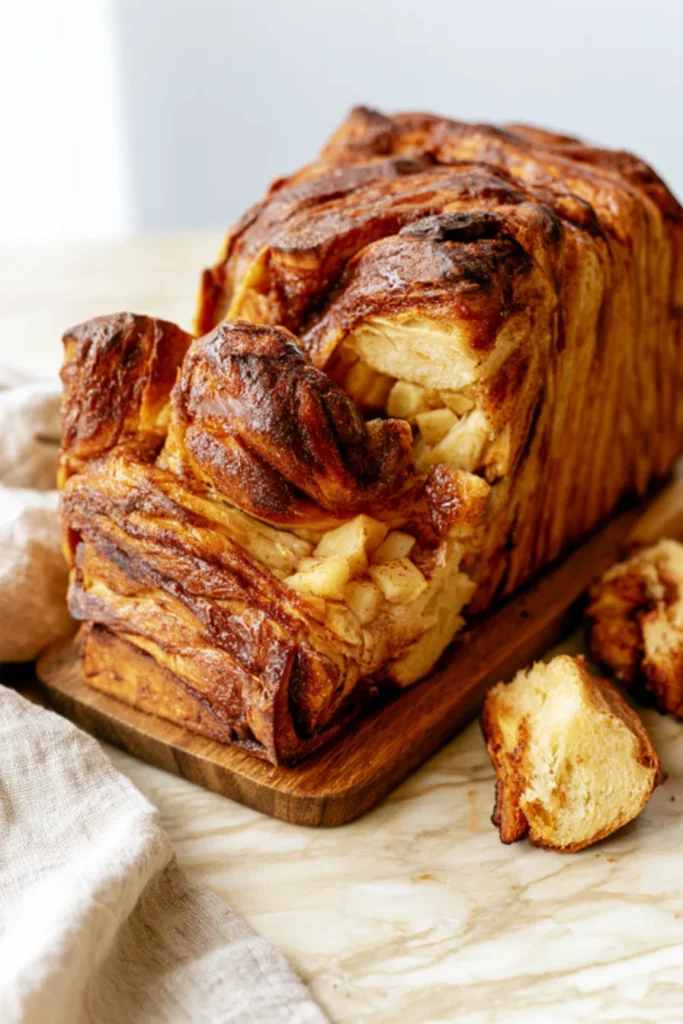
In the oven, the sugar on the outside turns into a crackly caramel crust, while the biscuit layers bake soft and the apple filling stays jammy. You serve it by pulling off pieces with your fingers, each one with a bit of apple pie inside. The only part that needs patience is the bake, which is longer than most people expect for a loaf pan full of biscuits.
Ingredients
For the apple filling
- 3 medium apples, peeled and diced small – small pieces cook through in a few minutes and fit between the biscuit layers.
- 2 tbsp butter – for cooking the apples.
- 1/3 cup (65 g) packed brown sugar – sweetens the apples and builds a caramel flavor.
- 1 tsp ground cinnamon and 1/4 tsp ground nutmeg – the classic apple pie spices.
- 1 tbsp lemon juice – keeps the filling bright so it does not taste flat next to all that sugar.
- A pinch of salt – balances the sweetness.
- 1 tbsp cornstarch mixed with 2 tbsp water – thickens the juices so they do not soak the dough.
- 1 tsp vanilla extract – stirred in off the heat.
For the bread
- 2 cans refrigerated biscuits – the large 16.3 oz (462 g) cans with 8 biscuits each are the size most loaf pan versions use. Smaller cans make a shorter loaf that bakes faster.
- 1/2 cup (113 g) butter, melted – one stick, for dipping each piece.
- 1 cup (200 g) granulated sugar mixed with 1 tbsp ground cinnamon – the coating that turns into the crust.
How to Make It
1. Cook the apple filling – medium heat, 8 to 10 minutes
Melt the butter in a skillet over medium heat. Add the apples, brown sugar, cinnamon, nutmeg, lemon juice and salt and cook, stirring often, for 6 to 8 minutes, until the apples are tender but still hold their shape. Stir in the cornstarch mixture and cook 1 to 2 minutes more, until the juices turn thick and glossy. Take the pan off the heat and stir in the vanilla. The filling should look like a thick apple pie filling, with no thin liquid pooling in the pan.
2. Let the filling cool completely – about 20 minutes
Spread the filling on a plate so it cools faster. While it cools, heat the oven to 350°F (175°C), grease the loaf pan well and mix the sugar and cinnamon in a shallow bowl. Put the melted butter in a second bowl. The filling should feel cool to the touch; warm filling softens the raw dough and makes the bottom gummy.
3. Split and coat the biscuits – 10 minutes
Separate each biscuit into two thinner rounds by pulling the layers apart. Dip each round in the melted butter, let the excess drip off, then turn it in the cinnamon sugar until fully coated. Every piece should be evenly covered in sugar, with no bare patches of dough.
4. Layer the loaf – 5 minutes
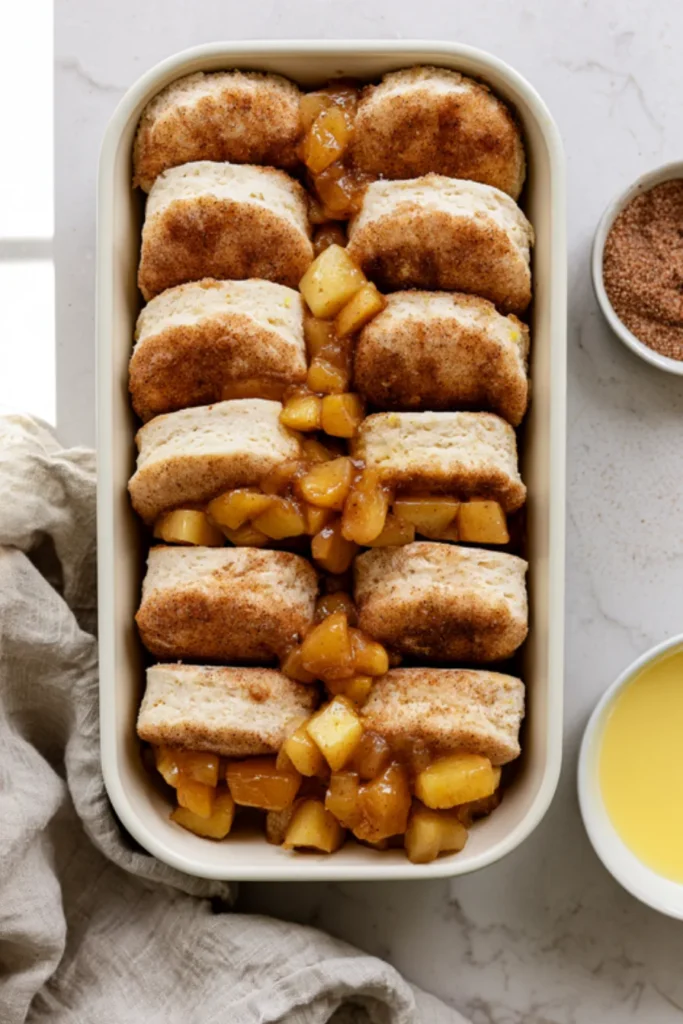
Stand the coated rounds on their edges in the loaf pan, packed side by side like a row of cards. After every two or three rounds, spoon in a little apple filling, keeping it in the middle of the pan rather than against the walls. Continue until all the rounds and filling are used. Sprinkle any leftover cinnamon sugar over the top. The pan should be full but not overflowing, with filling visible between the layers.
5. Bake – 350°F (175°C), 50 to 60 minutes
Set the loaf pan on a rimmed baking sheet to catch any butter and sugar that bubble over, and bake on the middle rack. After about 30 minutes, check the top; if it is already deep brown, cover the pan loosely with foil for the rest of the bake. Bake 50 to 60 minutes in total. It is done when the top is deep golden and caramelized, and a piece pulled from the very center with a fork looks flaky and cooked, not wet or doughy.
6. Cool and unmold – 15 minutes
Let the loaf rest in the pan on a rack for 15 minutes, so the caramel sets slightly and holds the layers together. Run a knife around the edges, turn the loaf out onto a plate, then flip it upright onto a board. Serve warm. The loaf should come out in one piece, with a shiny, sticky crust.
Why It Needs a Full Hour
A pan full of biscuit dough standing on its edges is much denser than the same biscuits baked flat on a sheet. The outside pieces brown quickly, but the heat takes a long time to reach the middle of the loaf, where the dough is packed tightly and surrounded by moist apple filling. Pull the pan out when the top looks done and the center will still be raw.
That is why this recipe bakes longer than the time printed on the biscuit can, and why the doneness check happens in the center, not on top. Foil is your friend here: it slows down the top while the middle catches up. If you use smaller cans of biscuits, the loaf will be shorter and lighter, so start checking the center at about 40 minutes.
Two other details help the center bake through. Cooling the filling completely means the dough starts the bake cold and firm instead of already softened. And keeping the filling away from the pan walls stops it from caramelizing against the metal, which makes the loaf stick when you turn it out.
Which Apples to Use
The filling is cooked before baking and then bakes for another hour, so choose apples that stay firm. Ohio State University’s guide to fresh-picked apples recommends Granny Smith for tart, firm slices that hold their shape and Honeycrisp for sweet, slightly firm ones, with a smaller amount of softer varieties such as Golden Delicious to fill the gaps. A mix of a tart and a sweet apple gives the filling the most apple pie flavor. Very soft apples tend to turn into applesauce here.
If you like apple desserts, compare this with the air fryer apple cake, which uses apple puree for a moist crumb, or the flourless oatmeal apple cake for a lighter option with no refined sugar.
Storing and Reheating
Pull-apart bread is best the day it is baked, while the crust is still crisp. Keep leftovers covered at room temperature and eat them within a day, or refrigerate them in an airtight container for up to 3 days. To bring back the soft texture, warm individual pieces in the microwave for 10 to 15 seconds, or reheat a larger portion wrapped in foil in a 325°F (160°C) oven for about 10 minutes.
For another cinnamon sugar treat made with biscuit dough, try the monkey bread muffins or the homemade cinnamon sugar biscuit bites, or browse all the dessert recipes.
Apple Pie Pull-Apart Bread
Ingredients
Method
- Melt the butter in a skillet over medium heat. Add the apples, brown sugar, cinnamon, nutmeg, lemon juice and salt and cook, stirring often, 6 to 8 minutes until tender. Stir in the cornstarch mixed with the water and cook 1 to 2 minutes until thick. Off the heat, stir in the vanilla.
- Spread the filling on a plate and let it cool completely, about 20 minutes. Meanwhile, heat the oven to 350°F (175°C), grease a 9x5-inch loaf pan and mix the granulated sugar and cinnamon in a shallow bowl.
- Split each biscuit into two thinner rounds. Dip each round in the melted butter, then coat it in the cinnamon sugar.
- Stand the rounds on their edges in the loaf pan, spooning a little apple filling between every two or three rounds and keeping it away from the pan walls. Sprinkle any leftover cinnamon sugar on top.
- Set the pan on a rimmed baking sheet and bake 50 to 60 minutes, covering loosely with foil after about 30 minutes if the top is browning fast. It is done when a piece from the center looks flaky and cooked, not doughy.
- Cool in the pan for 15 minutes, run a knife around the edges, turn out onto a plate and flip upright. Serve warm.